
A foil works like an aircraft wing, but in water, a fluid about 800 times denser than air. That’s why a wing of a few hundred cm² is enough to lift a board and its rider. Here are the words to know to understand what each part does.
The parts of the foil
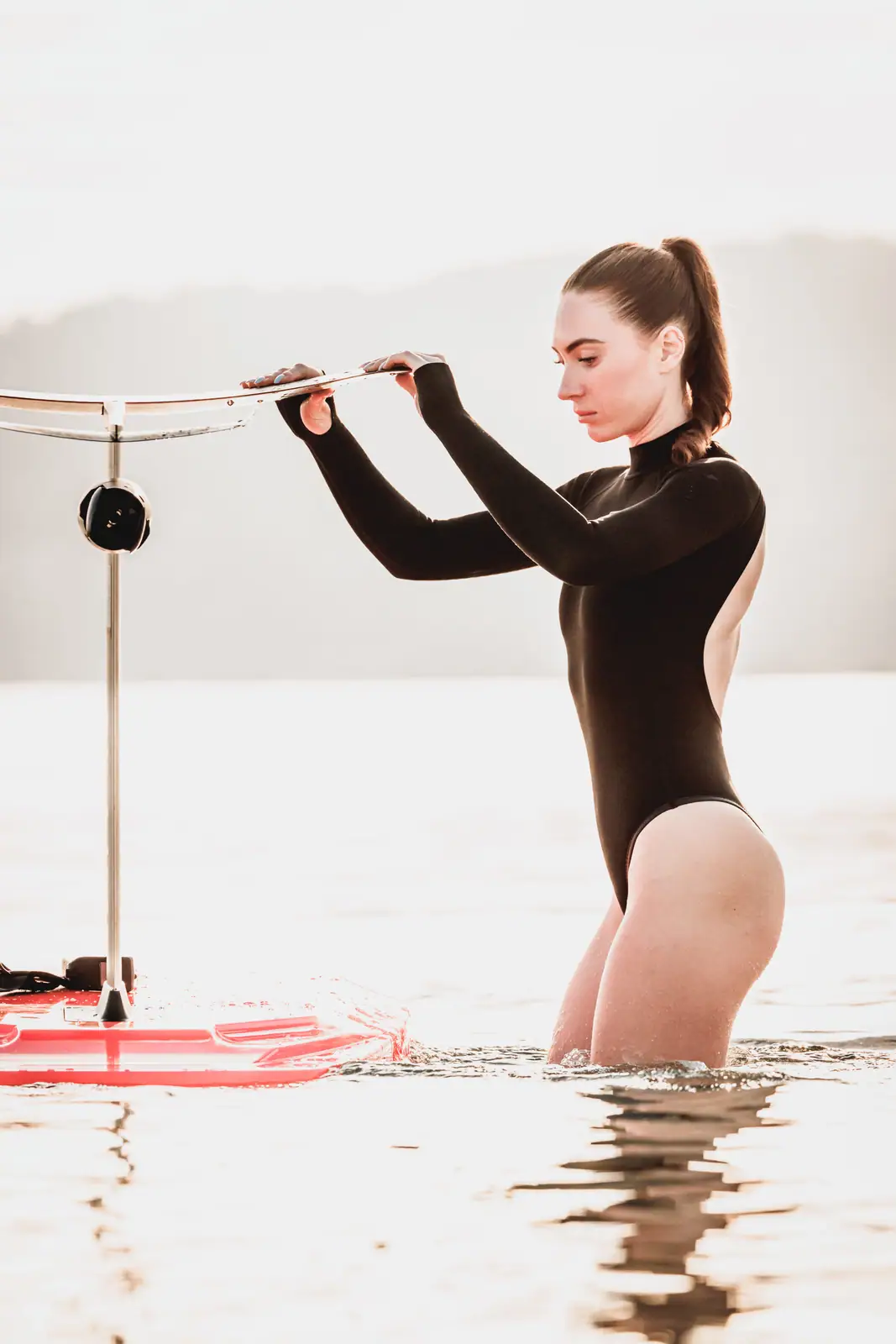
- Foil (hydrofoil): everything submerged under the board: the mast, the fuselage, the front wing and the stabiliser.
- Mast: the vertical part linking the board to the foil. The standard Plume mast is aluminium and 75 cm long; it holds the motor controller. An 90 cm carbon mast arrives in 2027 for riding open swell.
- Fuselage: the horizontal bar at the bottom of the mast, carrying the front wing and the stabiliser. The standard long fuselage gives stability; the short APEX fuselage (option -T) brings both wings closer for sharper turns.
- Front wing: the main wing, the one that lifts. At Plume, from 700 to 1900 cm², from the RACE to the JUMBO model. It changes the foil’s behaviour more than any other part: see our guide to choosing your configuration.
- Stabiliser (stab): the small rear wing. It balances pitch, the rise and fall of the nose, like an aircraft’s tailplane. Plume offers a standard 260 cm² stabiliser and a carbon stabiliser of 220 or 175 cm² (option -C).
Area, span and aspect ratio
- Area: the surface of the wing, in cm². A large area lifts early and forgives footwork mistakes; a small area goes faster and turns tighter. Plume wing names are rounded to the nearest hundred: the 1300 wing actually measures 1370 cm².
- Span: the width of the wing, from tip to tip.
- Aspect ratio (AR): the span squared divided by the area. AR = span² ÷ area.
The forces at play
- Lift: the upward force created by water flowing around the front wing. It grows with speed and area. With the 1600 cm² wing, the board takes off from about 15 km/h.
- Drag: the water’s resistance to forward motion. Less drag means a smoother glide and more range. An off-centre stance on the board increases drag.
- Take-off: the moment the board leaves the water and only the foil stays submerged.
- Ventilation: air drawn down from the surface along the mast or to the propeller, for example when the foil rises too high. The foil or the propeller then loses grip. The right reflex: keep the board parallel to the water without releasing the trigger; as it comes back down, the propeller grips again.
- Cavitation: vapour bubbles forming on a very fast surface, such as a propeller blade, which cost efficiency.
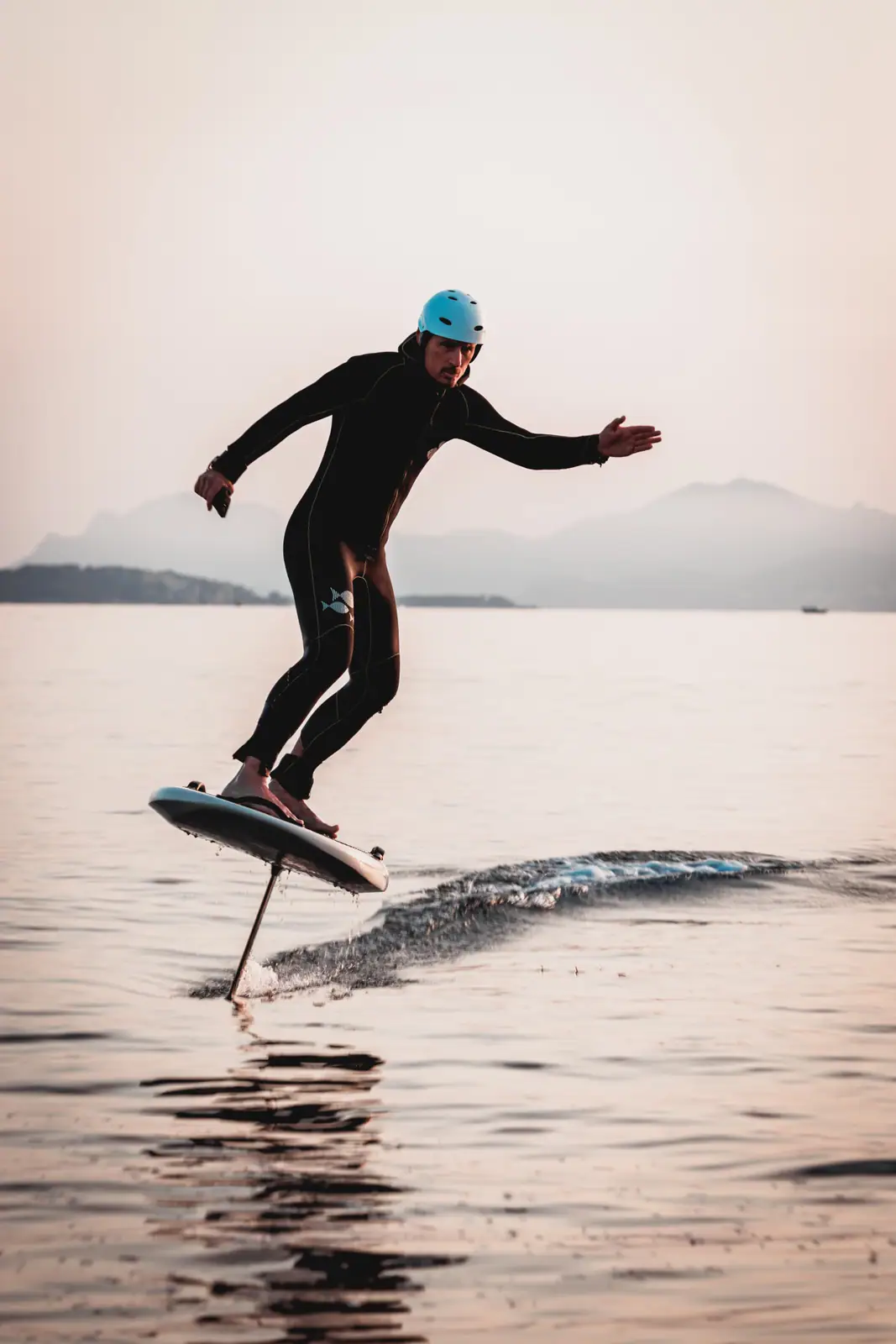
Terms specific to the Plume e-foil
- Direct-drive brushless outrunner motor: a brushless electric motor whose outer part spins and drives the propeller directly, with no gearbox. The Plume motor is patented and runs on ceramic bearings.
- Water-lubricated motor: there is no grease in the motor; the water lubricates it. In practice: don’t run it for long out of the water.
- Folding propeller blades: the blades open by centrifugal force when you accelerate and fold as soon as you release the trigger. The board can then glide on a swell without the propeller braking it.
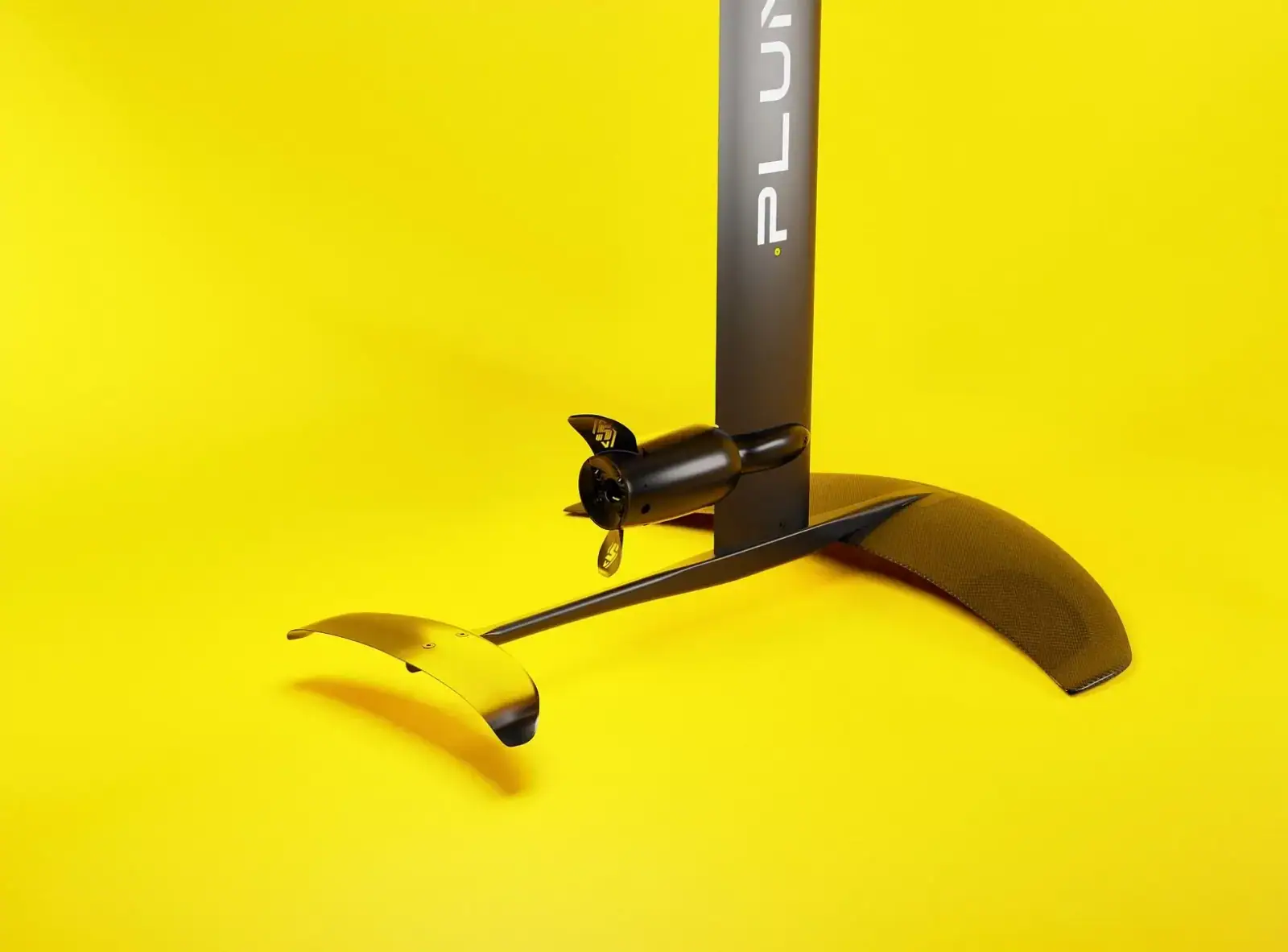
The R5-edition Plume, with the Renault emblem on the propeller, is presented in our post about the collaboration with Renault.
- Controller built into the mast: the electronics driving the motor sit inside the submerged mast and are passively cooled by the water, with no pump or hose.
- Battery (Ah, kWh, 12S8P): capacity is given in amp-hours (Ah) and energy in kWh. “12S8P” describes how the cells are assembled: 12 in series, 8 in parallel. The four Plume batteries range from 25.2 Ah (1.12 kWh) to 50.4 Ah (2.24 kWh). The battery is fixed in the board with 4 screws.
- Remote: held in the hand; the trigger sets the power. Three power levels (Low, Medium, High) and a trigger sensitivity you can adjust in the remote’s settings. It talks to the antenna housed in the board.
- Foil-assist: a motor that helps you take off, then leaves the foil free. The Lite high-mount motor (2027 delivery) is designed for this use in waves; see the guide.
- Hybrid kit (option -H): an unpowered mast to use the board and foil for wingfoiling or tow-foiling behind a boat.
- Configuration reference: the code describing a Plume, for example PBS13 (Standard motor, blue Standard board, 33.6 Ah battery, 1300 wing). The guide explains how to read it.
On the water
- Lying, kneeling and standing starts: the three steps of a first take-off, described in the manual’s First use chapter.
- Touchdown: the board touches the water without the rider falling. Bigger boards absorb them better.
- Carving: linked, banked turns, like snowboarding in powder.
- Pumping: keeping the foil going by flexing the legs. The short fuselage makes it easier.
- Swell riding with the propeller folded: using a swell’s energy by releasing the trigger. You often need to keep a touch of throttle, unless the wave really pushes.
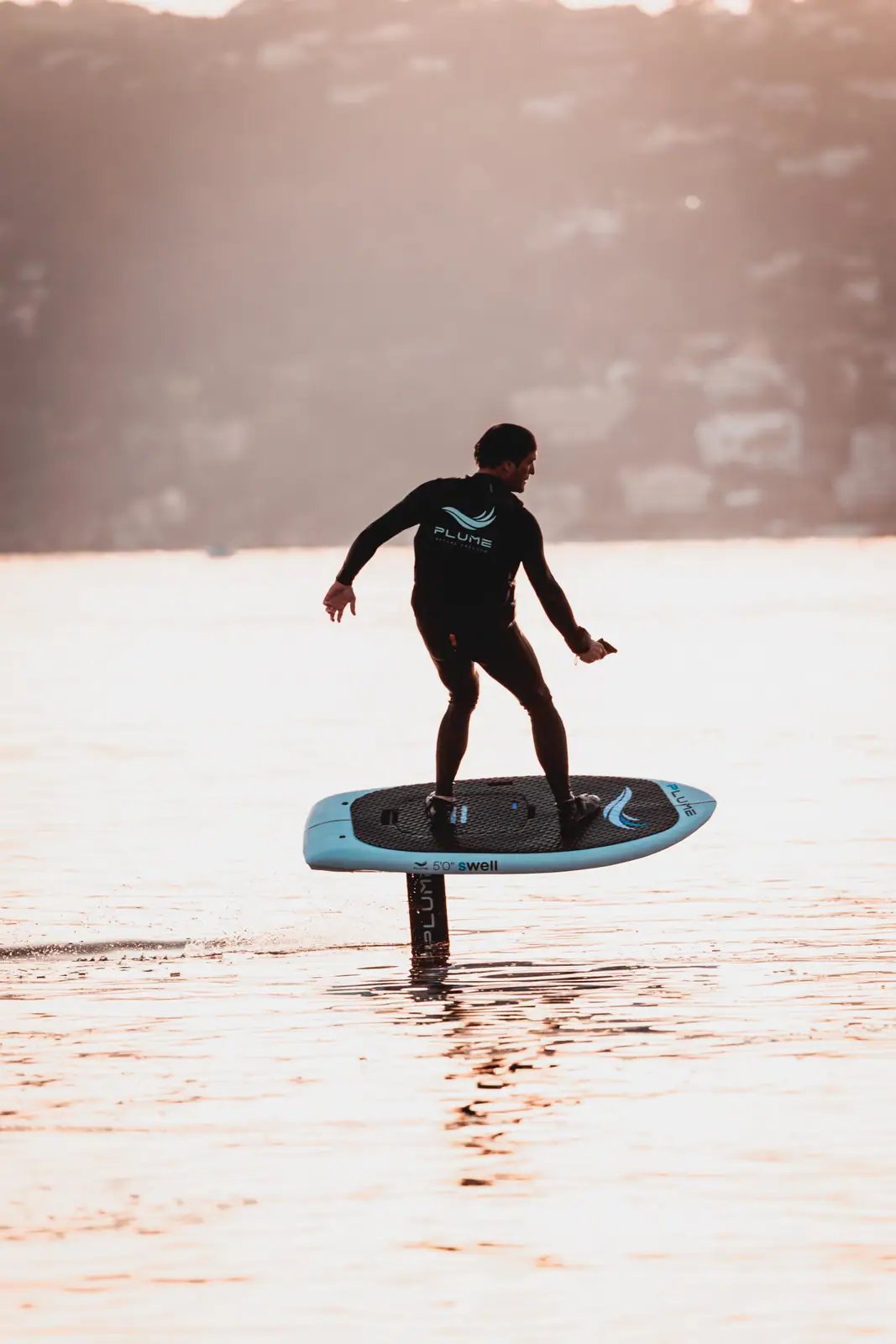
Ready to build your Plume? The configurator details every option, and our guide helps you choose in 5 questions.
Last updated
Fly with PLUME TECH
Ready to build your configuration or get a promo code?
Our team based in La Bouilladisse (France) advises you personally based on your weight and local spot.